
The best white paint for interior walls depends on the room’s lighting, undertones, flooring, cabinetry, and desired atmosphere. Warm whites can soften shaded rooms and natural materials. Cleaner or cooler whites can complement modern finishes and brighter spaces. Always test samples inside the actual room before making a final decision.
White paint is rarely a one-size-fits-all choice. A shade that appears balanced in a bright showroom may look creamier, grayer, or cooler inside your home. This guide explains how to compare white interior paint for walls, ceilings, doors, and trim without relying on an outdated annual color list.
At BVL Painting & Carpentry, we help homeowners in New Canaan, Ridgefield, and Greenwich compare colors under their actual lighting conditions. You can also explore designer-recommended interior paint colors before narrowing your options.
Choose the Best White Paint for Interior Walls
The best white paint for interior walls should coordinate with the fixed elements that will remain after painting. Flooring, countertops, stone, tile, cabinetry, and furniture can make a white appear warmer or cooler.
Next, observe the room throughout the day. Morning light, afternoon sun, and artificial lighting can produce noticeably different results. Testing samples on multiple walls provides more useful information than comparing small color chips under one light source.
Before Choosing a White Paint, Review
- Warm, cool, and neutral undertones nearby
- How much natural light enters the room
- The direction of the windows
- Flooring, cabinetry, countertops, and permanent finishes
- Door, trim, and ceiling colors
- How samples look in morning, afternoon, and evening
Compare Warm White and Cool White Paint Colors
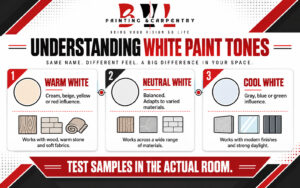
The best warm white paint colors often contain subtle cream, beige, yellow, or red influences. They can create a comfortable appearance alongside wood floors, warm stone, traditional furniture, and soft fabrics.
Cool whites may lean slightly gray, blue, or green. They can work with modern cabinetry, cool-toned flooring, stainless steel, and strong natural light. However, a cool white used in a darker room may appear flatter or grayer than expected.
Neutral whites sit between these categories and can adapt to a broader range of materials. Still, no white remains completely unchanged in every environment. Surrounding colors will influence how the eye perceives it.
Use This Room-by-Room White Paint Guide
The room’s function should guide the white type and finish. A relaxing bedroom may benefit from a softer white, while a kitchen may need a cleaner shade that coordinates with cabinets, counters, and backsplashes.
White Interior Paint Recommendations by Room
| Room | White Type to Consider | Why It May Work | Important Detail |
|---|---|---|---|
| Living room | Warm or neutral white | Creates a softer gathering space | Coordinate with flooring and furniture |
| Kitchen | Clean neutral white | Works with many cabinet styles | Compare against counters and backsplash |
| Bedroom | Soft warm white | Supports a comfortable atmosphere | Test under bedside lighting |
| Bathroom | Crisp or neutral white | Creates a clean visual effect | Consider tile and artificial lighting |
| Doors and trim | Neutral or crisp white | Defines architectural details | Select a durable finish |
For additional combinations, review these living room color palette ideas before selecting a wall and trim pairing.Find the Best White Paint for Living Rooms
The best white paint for living room walls often depends on how the space feels during the day and evening. A warm or balanced neutral white can help a living room feel comfortable without looking yellow.
Large windows, wood floors, fireplaces, furniture, and surrounding rooms should all influence the choice. In open layouts, the living room white should also connect smoothly with nearby hallways, kitchens, and dining spaces.
Living Room White Paint Tips
- Use warmer whites with wood tones and soft furnishings.
- Use cleaner whites with modern finishes and brighter light.
- Test samples near trim, flooring, and large furniture.
- Check the color at night under lamps and overhead lighting.
Popular White Paint Colors Homeowners Continue to Consider
Popular color names can provide a useful starting point, but they should not replace in-room testing. Manufacturer websites continue to list established options that homeowners often compare for walls, trim, cabinets, and ceilings.

Common White Paint Starting Points
- Benjamin Moore White Dove OC-17: A clean, classic off-white often considered for walls, cabinets, and trim.
- Sherwin-Williams Pure White SW 7005: A versatile white that can complement many modern and transitional interiors.
- Benjamin Moore Chantilly Lace OC-65: A bright white often considered when homeowners want a cleaner contrast.
- Sherwin-Williams Alabaster SW 7008: A balanced, softer white frequently used in comfortable living spaces.
The best warm white paint colors vary by room because surrounding materials can strengthen or reduce their warmth. Place samples beside flooring, textiles, and cabinetry before making a whole-home decision.
Choose the Right Finish for White Walls and Trim
Finish affects appearance, light reflection, cleaning, and how clearly the wall shows surface imperfections. Matte and flat finishes create limited reflection, while eggshell and satin finishes offer progressively more sheen.
Many homeowners consider eggshell for general living areas because it balances a soft appearance with practical cleaning. A more durable finish may be useful in hallways, kitchens, bathrooms, or other frequently touched areas.
The best white paint for doors and trim often uses satin or semi-gloss because these finishes create definition and support routine cleaning. However, the selected product should match the surface material and expected wear.
Understand Why White Paint Changes Throughout the Day
A room’s direction influences when it receives direct light. Morning light may make a white appear brighter or warmer, while shaded afternoon conditions may reveal gray, blue, or green undertones.
Artificial light also matters. Bulb color temperature, fixture placement, and shade design can change the wall’s appearance after sunset. For this reason, homeowners should view samples under the lighting they regularly use.
If you are considering a broader update, explore modern interior wall color ideas that can complement white paint without making every room look identical.
Coordinate White Walls With Doors and Trim
Walls and trim can use the same white in different finishes for subtle definition. Alternatively, a cleaner trim white can create contrast against softer wall paint. The correct approach depends on the room’s architectural details and other permanent finishes.
Avoid combining whites with conflicting undertones. A creamy wall color beside a cool blue-white trim may make one surface appear unexpectedly yellow or gray. Test the complete wall, ceiling, door, and trim combination together.
Get Professional Help With Interior Color Selection
Professional input is valuable when an open floor plan connects several rooms, the home has changing light exposure, or existing finishes contain mixed undertones. It can also help when walls, ceilings, doors, and trim require a coordinated palette.
At BVL Painting & Carpentry, we compare paint samples inside the property instead of relying only on digital images. We consider room orientation, lighting, flooring, cabinetry, and the atmosphere the homeowner wants to create.
Understanding how interior colors affect rooms can also help you decide whether a warm, balanced, or crisp white supports your design goals.

Frequently Asked Questions
What is the best white paint for interior walls?
The best option coordinates with the room’s light, flooring, cabinetry, and permanent finishes. Test warm, cool, and neutral samples before selecting one.
What is the best white paint for living rooms?
A warm or balanced neutral white often creates a comfortable living room. However, the correct shade depends on window direction, furniture, and flooring.
Should ceilings match the white used on walls?
They can match, but they do not have to. Using the same color in a flatter finish creates continuity, while a different white can add subtle contrast.
Should white trim be lighter than white walls?
Lighter trim can create definition, but matching the wall color in a different finish may look more cohesive. Compare both combinations inside the room.
How many white paint samples should homeowners test?
Testing three or four carefully selected options is usually more manageable than comparing numerous similar whites. View every sample on multiple walls and at different times.
Choose a White Paint That Complements Your Home
The best white paint should respond to your home rather than follow a temporary annual trend. Lighting, undertones, finishes, room use, and surrounding materials determine whether a white feels balanced throughout the day.
At BVL Painting & Carpentry, we serve homeowners in New Canaan, Ridgefield, and Greenwich, Connecticut. Call (914) 719-3655 or book your color consultation to compare white paint options inside your home.