
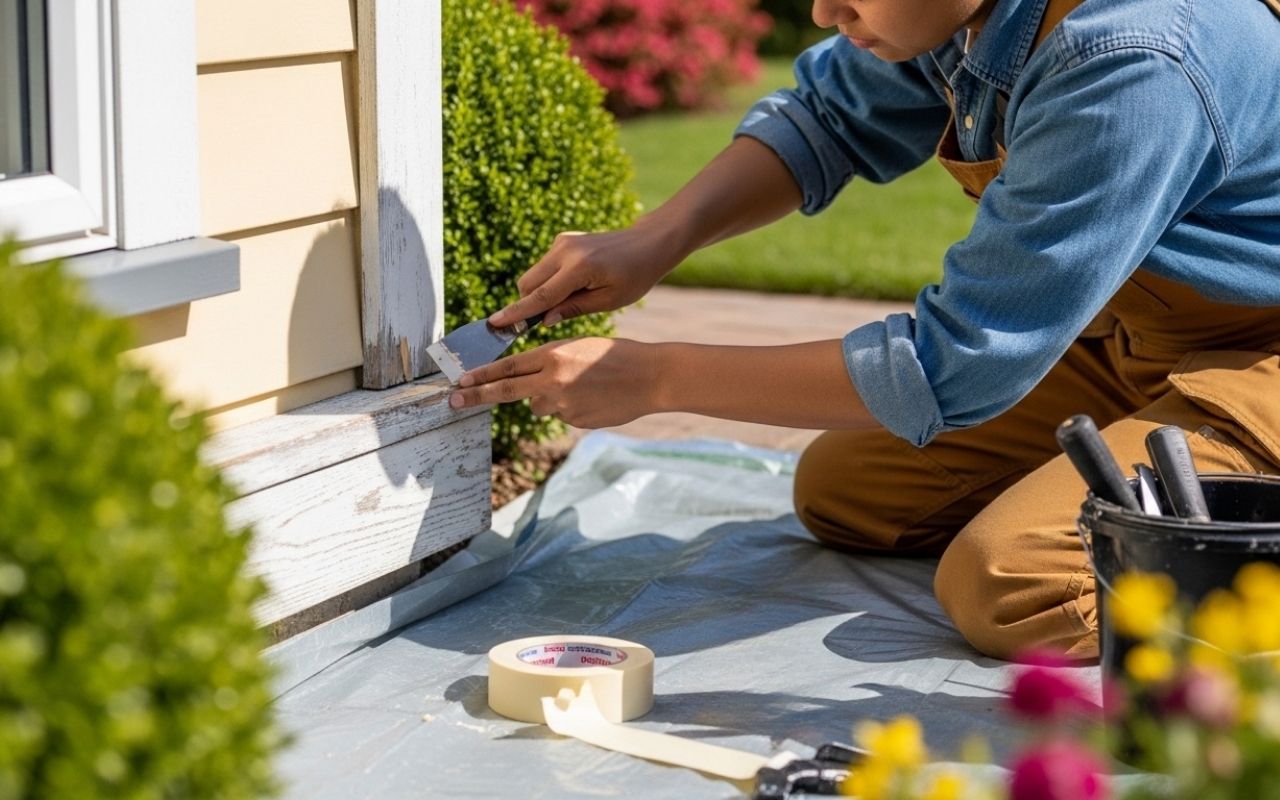
Before any color goes on your home, we suggest checking every board first. When we repair wood trim before painting, we help the finish look cleaner, last longer, and stay better protected from sun, rain, and changing weather.
Moreover, damaged trim can hide bigger issues below the surface. At BVL Painting & Carpentry, we know that careful prep prevents peeling, chipping, and wasted effort, so your exterior update feels polished from the start.
Assess Wood Trim and Find Hidden Outdoor Damage
First, walk around your home and look closely at each trim board. Check windows, doors, eaves, and corners for cracks, holes, peeling paint, or soft spots that may point to moisture damage.
Next, press gently with a small tool where wood looks weak. If it feels soft, you may have exterior wood trim repair needs or signs of rotten trim before painting. At BVL Painting & Carpentry, we document every trouble spot before we move forward.
Gather Simple Tools and Plan Each Repair Step
Before starting, we collect the right items so the work moves smoothly. This keeps the job safer, faster, and more organized from the first cut to the final coat.
- Pry bar, hammer, utility knife, and saw
- Wood filler, wood hardener, caulk, and primer
- Safety glasses, gloves, sanding blocks, and drop cloths
In addition, good prep helps us avoid delays and uneven results. BVL Painting & Carpentry also plans each repair area early, so we can handle wood repair for paint prep with better care.
Remove Broken Boards and Protect Nearby Surfaces
Then, we cut through old paint lines and loose caulk before lifting damaged trim. This helps protect the siding and keeps nearby surfaces from getting chipped during removal.
After that, we pull nails carefully and clear away debris. If a board is beyond saving, we may need to replace damaged fascia boards or remove other weak pieces before the new material goes in.
Repair Rotten Areas and Rebuild Missing Sections
When damage is limited, we do not always replace the full board. Instead, we remove soft wood, treat the area, and rebuild the missing shape with durable filler made for outdoor use.
As a result, the trim keeps its profile and becomes ready for smoothing. At BVL Painting & Carpentry, we repair wood trim before painting with methods that support a cleaner and longer-lasting finish.
Fill Small Gaps and Sand Every Surface Smoothly
Once the major damage is fixed, we fill small cracks, nail holes, and minor dents. Thin layers usually dry better and reduce shrinking, so the surface stays more even.
Afterward, we sand in stages to create a smooth base. This step matters because when we repair wood trim before painting, a flat and clean surface helps primer and paint hold much better.
Prime Each Board and Seal Open Exterior Joints
Next, we apply primer to bare wood, repaired spots, and exposed edges. Primer helps block moisture, improves paint grip, and reduces early wear, especially on trim that faces sun and rain.
- Coat end grain and seams well
- Let each layer dry fully
- Re-caulk open joints after repairs
Therefore, this stage should never be rushed. BVL Painting & Carpentry uses careful prep because strong sealing helps protect the home and supports better color coverage later.
Apply Exterior Paint With Clean and Even Coats
Once primer dries, we brush edges carefully and roll wider areas for even coverage. We usually apply two lighter coats because they level better and cure more evenly than one thick coat.
- Work from top to bottom
- Keep a wet edge when possible
- Lightly sand between coats if needed
In the same way, weather matters during this step. When we repair wood trim before painting, we also watch temperature and humidity so the paint can dry well and stay bonded.
Frequently Asked Questions
Why should wood trim be repaired before painting?
Because paint will not hide soft or broken wood for long. If damage stays in place, moisture can keep spreading, and the new finish may peel much sooner.
How can we tell if trim needs replacement?
If the wood feels soft, breaks apart easily, or has deep decay, replacement may be the better choice. Small surface damage, however, can often be repaired successfully.
Can small rotten spots be fixed without replacing boards?
Yes, in many cases they can. We remove the weak area, strengthen the surrounding wood, and rebuild the shape with outdoor filler before sanding and priming.
What kind of paint works best on exterior trim?
Usually, high-quality exterior acrylic paint performs very well. It handles weather changes better, cleans more easily, and helps reduce cracking and fading over time.
When should we ask for professional help?
If damage is widespread, near rooflines, or hard to reach safely, professional support is the smart choice. You can contact BVL Painting & Carpentry for guidance.
Protect Your Home and Keep Trim Looking Great
In the end, good results start with careful prep. When we repair wood trim before painting, we help create a finish that looks sharp, lasts longer, and better protects the exterior from daily wear.
At BVL Painting & Carpentry, we believe strong prep leads to strong results. You can explore our custom carpentry services, review home carpentry finish ideas, or reach out through our contact page to plan your next project.