
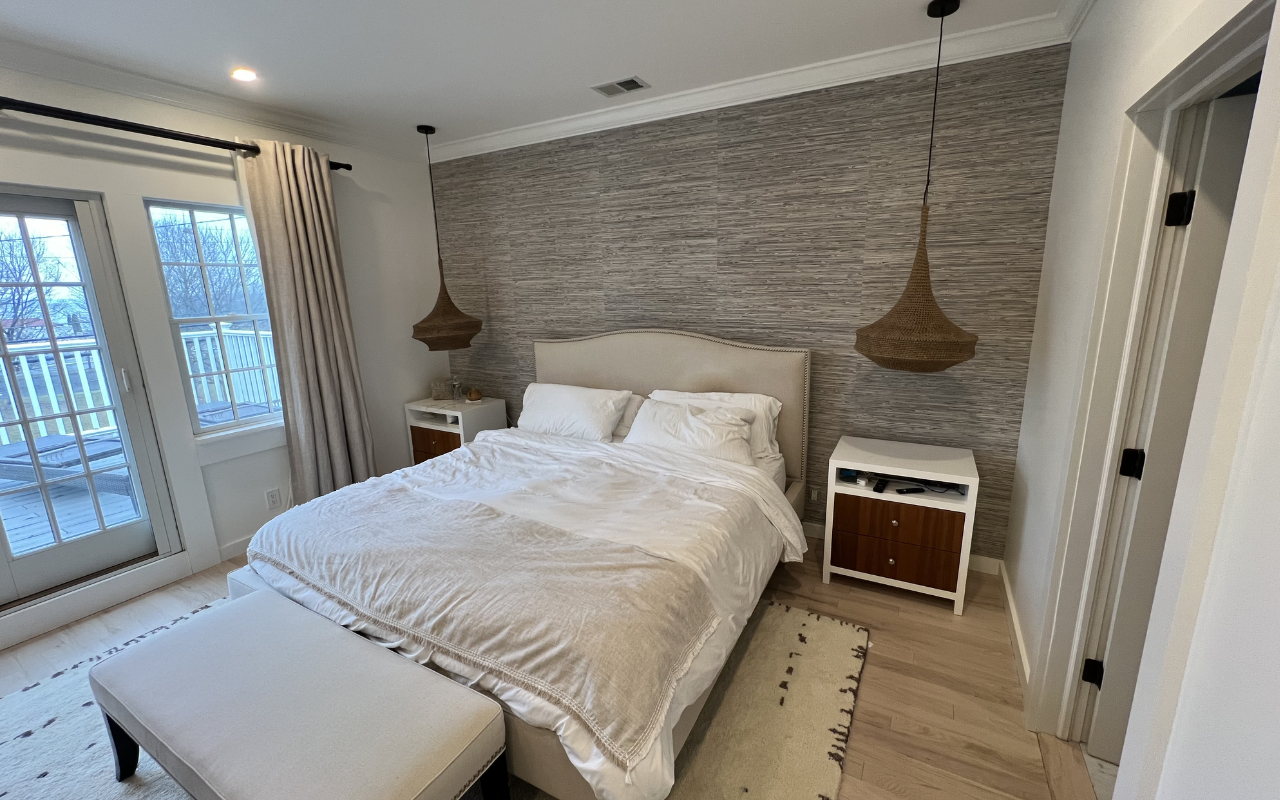
Wallpaper is one of the few finishes where small mistakes stay visible for years. A seam that opens, a pattern that drifts or a bubble near a light switch is hard to hide. Professional wallpaper installation removes most of that risk. If you are planning a room, you can request a wallpaper estimate before buying rolls.
Is It Hard to Install Wallpaper Yourself?
Simple, pre-pasted paper on a flat accent wall is a reasonable DIY project. Most rooms are harder than they look.
- Walls are rarely straight or square, so patterns drift
- Outlets, windows and corners need precise relief cuts
- Grasscloth, silk and hand-printed papers stain easily from paste
- High ceilings and stairwells need scaffolding and two people
The more expensive the paper, the higher the cost of a mistake.
Peel-and-stick paper is the exception. It works for renters and small projects, but it rarely matches the look or lifespan of traditional paper, and it can lift in humid rooms.
Surface Preparation Decides How Long Wallpaper Lasts
Most failures start under the paper. Glossy paint, old adhesive, patched drywall and hidden moisture all weaken the bond. Skipping prep is the most common reason for bubbles, lifting edges and seams that show the wall color underneath.
A professional crew repairs cracks, sands patches smooth, removes old residue and applies a wallcovering primer. That primer helps the paper grip now and come off cleanly later. Our guide to wall prep after removal explains what this looks like on older walls.
Precise Measuring, Matching and Seam Placement
Installers plan the layout before the first strip goes up. To get that plan for your room, you can book a wallpaper consultation with our team.
- Measure each wall and calculate pattern repeat and waste.
- Choose a starting point so the pattern is centered on focal walls.
- Hang a plumb first strip instead of trusting the corner.
- Match each pattern at eye level, where mismatches show most.
- Place the final seam in the least visible corner.
Ceilings, stairwells and sloped walls need extra planning. Installers start from the most visible point so the pattern looks centered where people actually look.
Choosing the Right Wallpaper Material for Each Room
| Room | Better choice | Why |
|---|---|---|
| Powder room | Vinyl or coated paper | Handles humidity and hand splashes |
| Dining room | Grasscloth or textured paper | Low traffic, high visual impact |
| Hallway | Scrubbable non-woven paper | Resists scuffs and bags |
| Bedroom | Traditional or hand-printed paper | Low wear, room for delicate finishes |
Paper weight, backing and finish all affect how a wallcovering hangs and lasts. Viewing samples in the room’s real light helps avoid surprises. At BVL Painting & Carpentry, we review each wall with you before ordering, so the paper, adhesive and layout fit the room.
Bathrooms need extra thought; see our comparison of bathroom wallpaper or paint.
What Are the Disadvantages of Wallpaper?
Wallpaper is not right for every wall. It can peel in rooms with poor ventilation, it is harder to touch up than paint and removal takes time.
Moisture is the biggest risk. Paper hung near showers or in damp basements without the right adhesive often peels at the seams within a year or two.
Most of these drawbacks shrink with the right paper, good prep and correct adhesive. Our article on common indoor wallpaper problems shows the warning signs.
Is Wallpaper Still in Style for Homes in 2026?
No. Designers keep using it for powder rooms, dining rooms, ceilings and accent walls. Textured papers, large murals and natural fibers are especially popular in Westchester and Fairfield County homes.
The trend is toward fewer, bolder walls instead of papering every room. Our clients often choose grasscloth for dining rooms, bold prints for powder rooms and soft murals for offices and nurseries.
Time Savings and Durability From Expert Installation
A crew that hangs paper every week works faster and wastes less material. Correct paste, smoothing and trimming also mean fewer lifted edges and open seams later.
Professional crews also know which adhesive suits each paper. Heavy vinyl, delicate silk and natural fibers each need a different paste and handling method. Clean trimming at ceilings, baseboards and outlets also keeps edges from catching and lifting over time.
At BVL Painting & Carpentry, we often fix DIY rooms where seams opened within months because the wall was never primed.
Wallpaper Installation for Homes and Businesses
Our team installs and removes wallpaper across Westchester County, NY and Fairfield County, CT.
Our crews bring more than a decade of hands-on experience and are fully licensed and insured in CT and NY for residential and commercial projects (WC: 37-106 H23 / CT: HIC0651374). At BVL Painting & Carpentry, we also offer bilingual service in English and Spanish.
See finished rooms and options on our wallpaper installation and removal page.
Frequently Asked Questions
Do painters install wallpaper?
Some do. Our team handles both painting and wallpaper, so prep and finishing stay with one crew.
How long does professional installation take?
A single accent wall often takes a day. Full rooms depend on wall prep, paper type and pattern. Removing old paper first adds time.
Can wallpaper go over painted walls?
Yes, once the paint is clean, sound and primed with a wallcovering primer.
Which wallpaper is best for humid rooms?
Vinyl or coated papers, paired with good ventilation.
Do you offer free estimates?
Yes. Estimates are free, and we work Monday to Friday, 9:00 AM to 5:00 PM.
Getting a Flawless Wallpaper Finish the First Time
Professional wallpaper installation protects your investment in the paper, the walls and the time it takes to get it right. From the first measurement to the final trim, careful work shows in every seam.
Call (914) 719-3655, text (203) 385-2371 or schedule your wallpaper project today.