
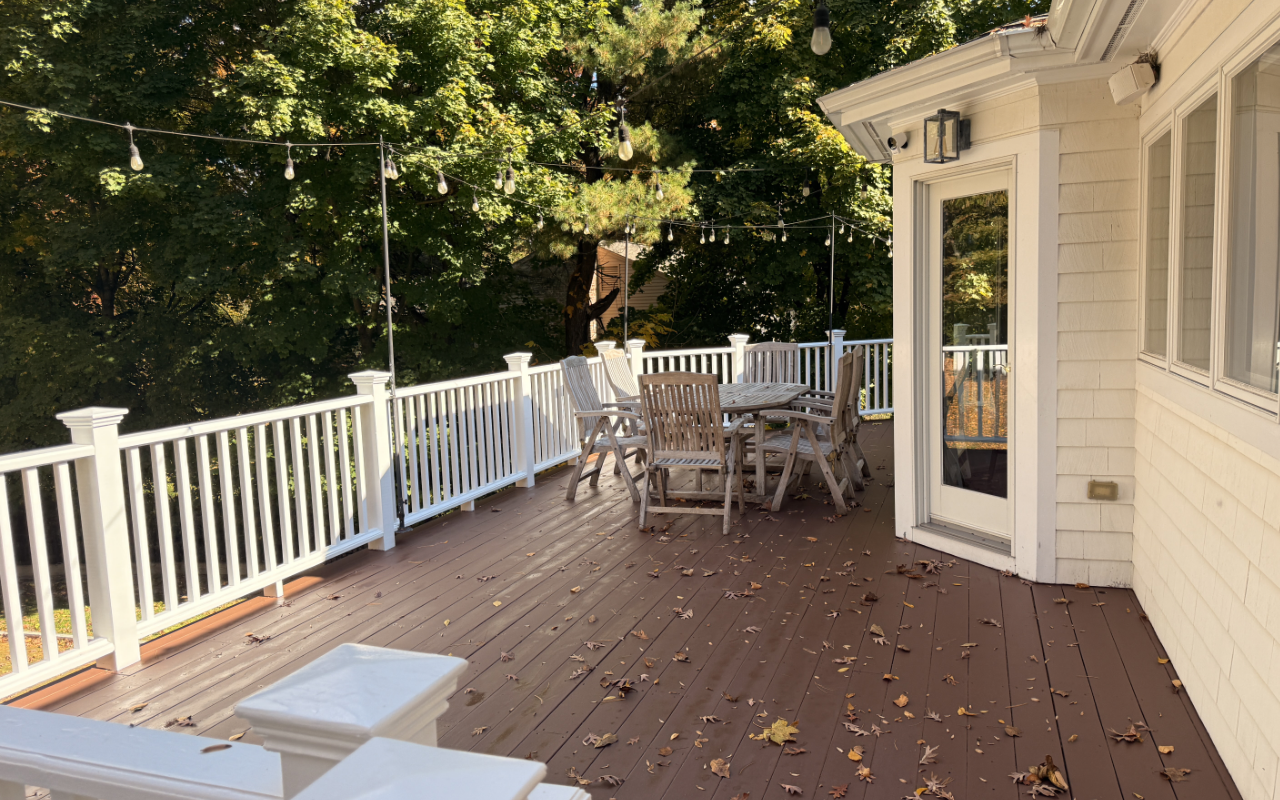
Soft boards near the stairs, splintered railings and trim pulling away from the rim joist are signs a deck is reaching the end of its life. Before rebuilding, most homeowners face one big choice: stay with wood or move to composite. You can request a deck estimate and compare both options for your yard.
The Trex deck vs wood deck decision comes down to maintenance, appearance, heat, budget and how long you plan to stay in the home. This guide walks through each factor, plus the trim and carpentry details that make either deck look finished.
Comparing the Two Materials Side by Side
| Factor | Trex and other composites | Wood decking |
|---|---|---|
| Upkeep | Occasional washing, no staining or sealing | Regular cleaning, staining or sealing |
| Look | Consistent color and grain patterns | Natural grain that ages and weathers |
| Splinters and rot | Boards resist rot, insects and splinters | Can rot, crack and splinter without care |
| Heat in direct sun | Darker boards can get hot | Usually stays cooler to the touch |
| Upfront investment | Higher | Lower, depending on species |
| Refinishing | Not designed to be painted or stained | Can be stained or painted to change color |
Neither option is right for every home. The best choice depends on sun exposure, how the deck is used and how much maintenance you want each year. A shady, damp yard and a sunny, open one can point to different answers.
Is Composite Decking Worth It for Northeast Homes?
For many homeowners in Westchester and Fairfield County, yes. Freeze-thaw cycles, wet springs and shaded backyards are hard on wood, and composite boards hold up well in those conditions without yearly staining.
The higher upfront investment is often balanced by years of skipped refinishing. Homeowners who plan to stay long term usually see the most value from composite.
Composite also suits busy households. Families with kids, pets and frequent guests appreciate surfaces that do not splinter and do not need weekend refinishing every couple of years.
Does Trex Decking Need Maintenance Through the Year?
Less than wood, but not zero. Composite boards need occasional washing to remove pollen, leaves and mildew, especially under trees. Grills and planters should sit on protective mats. To plan a low-maintenance deck around your yard, you can ask about composite decking with our carpenters.
- Wash with soap and water or a cleaner approved by the manufacturer
- Sweep leaves before they stain the surface
- Clear snow with a plastic shovel, not a metal edge
- Check the framing underneath every few years
The framing below composite boards is usually still pressure-treated lumber, so the structure needs the same care as any deck. Loose ledger connections or soft joists should be addressed before new boards go on.
Why Wood Decks Still Make Sense for Some Homes
Cedar and pressure-treated decks offer a natural look that many owners of older homes prefer. They can also be stained or painted to match a new house color later, which gives flexibility when the exterior is repainted.
Wood suits homeowners who enjoy seasonal upkeep or want a lower initial investment. Our guide to deck painting before summer shows how regular finishing keeps wood looking its best.
Replacing Rotted Deck Boards and Trim
Not every tired deck needs a full rebuild. When the framing is sound, rotted boards, stair treads and trim can often be replaced on their own, sometimes with composite boards on top of a solid frame.
Fascia boards, skirting and rim trim take the most weather. Our article on replacing rotted exterior trim explains the warning signs, and our exterior carpentry services overview covers related work around the home.
Trim Details That Make Any Deck Look Finished
- Wrap the rim joist with fascia boards for a clean edge.
- Add skirting to hide framing and storage underneath.
- Use picture-frame borders around the deck surface.
- Cap stair risers to match the decking color.
- Choose railings that suit the style of the house.
These details separate a basic platform from a deck that looks like part of the home. Painted trim that matches the house body or window trim ties everything together.
Planning a Deck Project Before Spring
Late fall and winter are good times to plan, choose materials and schedule carpentry before the spring rush. At BVL Painting & Carpentry, we review the framing, the trim and the layout before recommending wood or composite.
Our team at BVL Painting & Carpentry brings more than a decade of hands-on experience and offers bilingual service in English and Spanish. We are fully licensed and insured in CT and NY for residential and commercial projects (WC: 37-106 H23 / CT: HIC0651374). See more of our carpentry projects in Westchester.
Frequently Asked Questions
Can composite boards go on an existing wood frame?
Often, if the frame is sound and joist spacing meets the manufacturer’s requirements.
Does composite decking get slippery?
It can when wet or icy, like wood. Textured boards, good drainage and regular cleaning help reduce the risk.
Can I paint a Trex deck?
Composite is not designed to be painted. Choose the color you want from the start, ideally after seeing samples in your own yard.
How long does a wood deck last?
It depends on the wood, exposure and maintenance. Regular sealing helps extend its life.
Do you offer free estimates?
Yes. Free estimates are available for deck and trim carpentry.
Choosing the Deck That Fits Your Home and Lifestyle
The Trex deck vs wood deck choice is about balancing maintenance, appearance and long-term value. With sound framing and good trim, either one can last for years.
At BVL Painting & Carpentry, we are ready to help. Call (914) 719-3655 or plan your deck project today.