
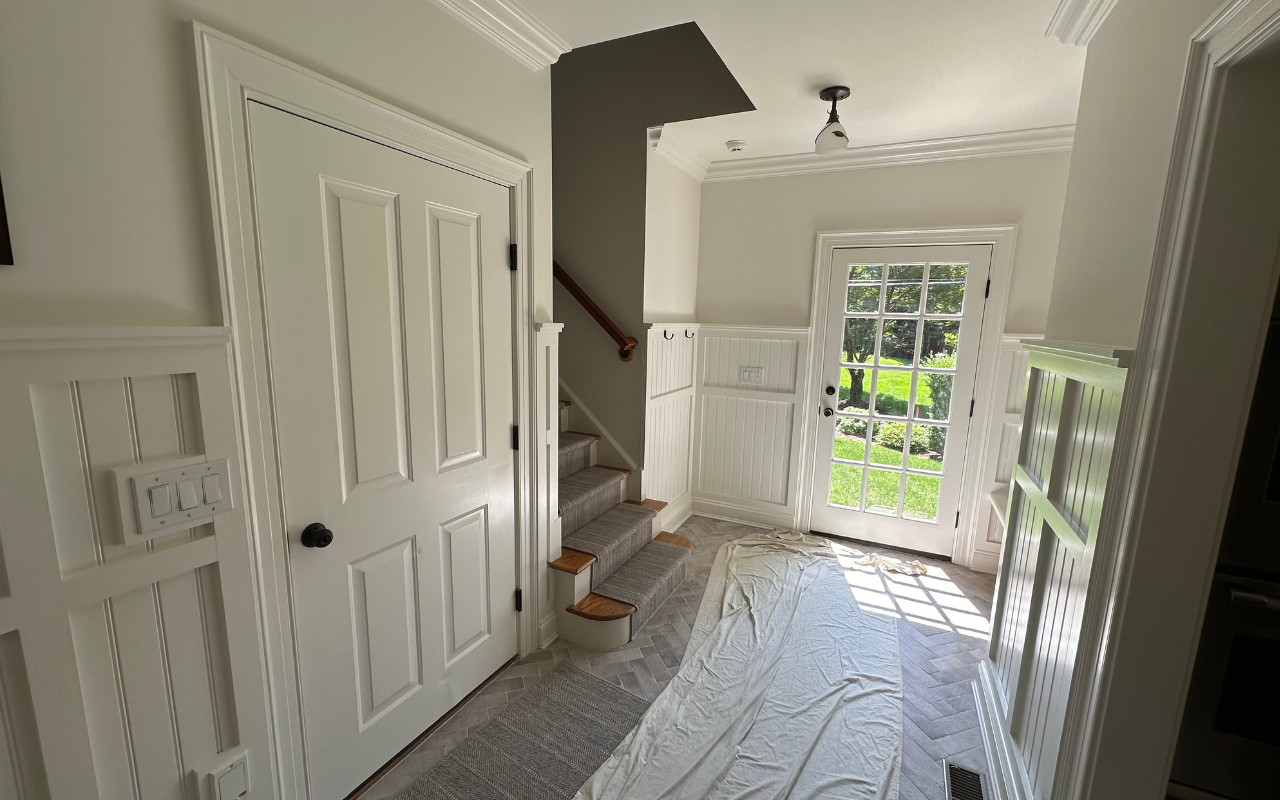
Walk through most older homes in Westchester and Fairfield County and the doors tell the story. Thin builder-grade casing, gaps at the corners and flat slab doors make rooms feel unfinished, even after fresh paint. You can request a millwork estimate and see what an upgrade would involve.
Well-planned interior door millwork changes how a room reads before anyone notices the furniture. Casing, headers and door panels frame every opening, so small decisions here repeat throughout the house.
The Parts of Door Millwork and What Each One Does
| Component | What it does | Common style choices |
|---|---|---|
| Casing | Frames the opening and covers the gap between jamb and wall | Flat, colonial, fluted, back-banded |
| Header or head casing | Caps the top of the opening | Simple cap, crown detail, pediment |
| Plinth blocks | Transition between casing and baseboard | Plain or beveled blocks |
| Door panels | Shape the door face itself | Shaker, raised panel, flat panel |
| Jamb and stop | Hold and seal the door in the frame | Clean, square profiles |
Most upgrades combine two or three of these. New casing with a crowned header often makes the biggest visual difference for the work involved.
Interior Door Casing Styles for Different Home Types
The right casing depends on the architecture. A Colonial in Ridgefield usually calls for wider casing with a defined back band, while a modern home in Westport often looks best with flat, square-edged trim.
- Colonial and Georgian homes: wide casing with back band and crown header
- Farmhouse styles: flat casing with a simple cap and visible plinths
- Craftsman homes: thick flat casing with a heavier head piece
- Modern homes: slim, square trim or reveal-style casing
Matching casing to the house keeps the millwork from looking like an add-on. When a home mixes styles from past renovations, choosing one consistent profile for the main floor brings everything back together.
Custom Door Headers and Crown Details That Add Height
A built-up header with a small crown or cap molding draws the eye upward and makes standard eight-foot ceilings feel taller. To see which header profiles suit your rooms, you can discuss header detail options with our carpenters.
Headers work best when they repeat the same profile used in crown molding or window trim. Our guide to Fairfield County trim styles shows how profiles can tie a home together.
Paneled and Shaker Interior Doors Compared
Shaker doors
Flat recessed panels with square frames suit transitional and farmhouse interiors. They are easy to paint and pair well with simple casing.
Raised panel doors
Beveled panels add depth and fit traditional homes with heavier trim. They look best with wider casing and a crowned header.
Solid core vs hollow core
Solid core doors feel heavier, block more sound and hold paint and hardware well, which matters on bedroom and office doors. Hollow core doors are lighter but can sound and feel less substantial in finished rooms.
How Interior Door Trim Installation Works
- Check each opening for square, plumb and level.
- Remove old casing carefully to protect the wall surface.
- Shim and adjust jambs so doors swing and latch correctly.
- Cut and fit new casing with tight miters or butt joints.
- Fill nail holes, caulk seams and sand for a smooth finish.
- Prime and paint casing and doors in the chosen sheen.
Careful prep is what makes millwork look custom. Uneven walls and out-of-square openings are common in older homes and need to be handled before trim goes up.
Paint Finishes That Make Millwork Look Sharp
Semi-gloss and satin finishes are popular for trim because they clean easily and highlight profiles. A slightly different sheen on casing than on walls adds subtle contrast.
Many homeowners paint doors a deeper color than the casing for a more tailored look. Our article on interior door style ideas covers finish and color pairings.
Mistakes That Make New Millwork Look Cheap
Thin casing next to heavy baseboard, mismatched profiles from room to room and visible gaps at miters are the most common problems. Skipping caulk and filler also leaves shadows that show through paint. Another frequent issue is casing that sits proud of the wall because the jamb was never adjusted.
At BVL Painting & Carpentry, we plan millwork for the whole floor, not just one doorway, so every opening matches. Our team brings more than a decade of hands-on experience to finish carpentry.
Our Carpentry Approach Across Westchester and Fairfield
With BVL Painting & Carpentry, you get carpentry and painting from one crew, so trim is installed, filled and finished without hand-offs. We are fully licensed and insured in CT and NY for residential and commercial projects (WC: 37-106 H23 / CT: HIC0651374), and we offer bilingual service in English and Spanish.
See examples of our custom carpentry and trim work, along with seasonal ideas in our custom millwork project ideas.
Frequently Asked Questions
Can new casing be added without replacing the doors?
Yes. Casing and headers can be upgraded around existing doors when the jambs are in good shape.
How long does a door millwork upgrade take?
It depends on the number of openings and the paint work. A few doors may take a day or two.
Should all interior doors match?
Usually yes on the same floor. Consistent casing and door styles make a home feel cohesive.
Is wider casing always better?
Not always. It should suit ceiling height, wall space and the style of the house.
Do you offer free estimates?
Yes. Free estimates are available for millwork and carpentry projects.
Framing Every Room With Better Door Details
Thoughtful interior door millwork adds character, hides imperfections and gives every room a finished look.
At BVL Painting & Carpentry, we are ready to help. Call (914) 719-3655 or plan your door millwork today.