
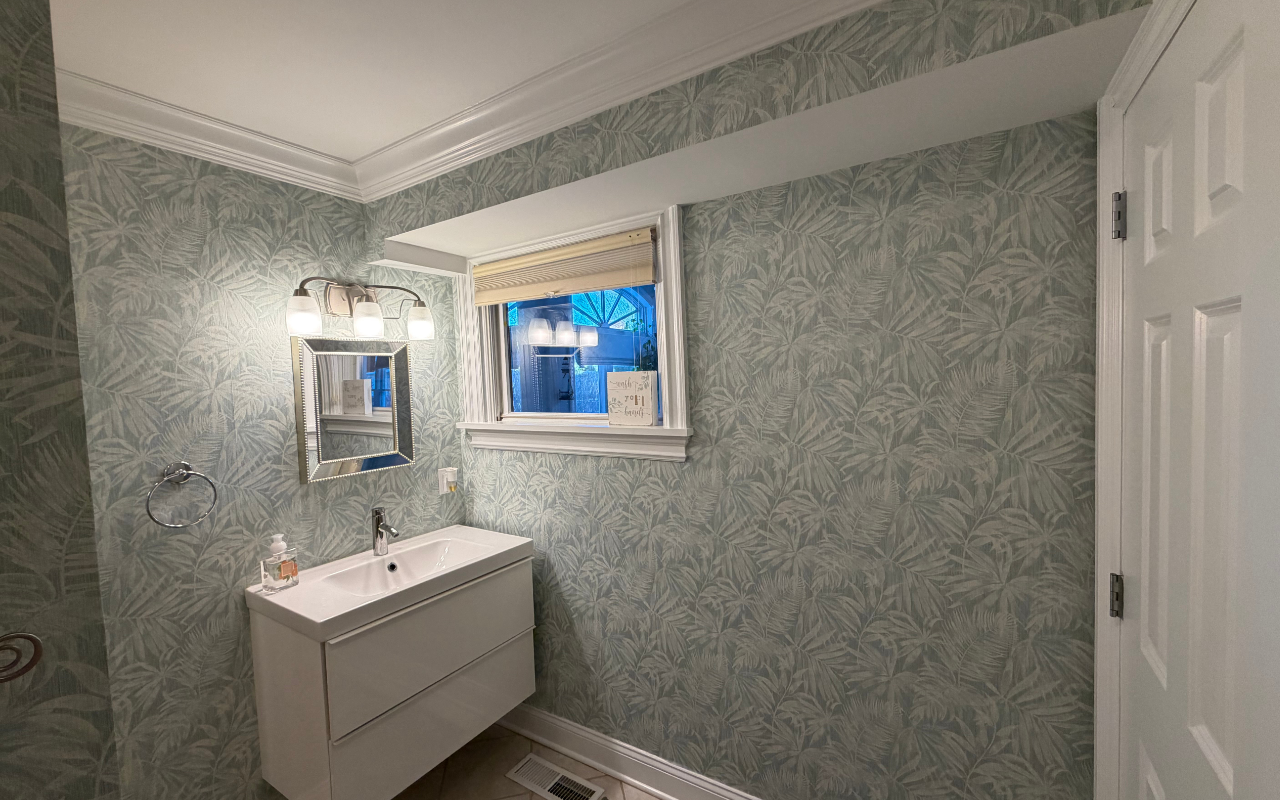
Choosing a wall finish for a humid room takes careful thought. Steam, splashes, and condensation can cause peeling, bubbles, stains, or trapped moisture. This guide compares moisture resistance wallpaper vs paint so you can select a finish that matches your room and maintenance needs.
At BVL Painting & Carpentry, we look at ventilation, wall condition, water exposure, and design goals before recommending an option. You can also explore our professional painting services to understand how surface preparation supports stronger results.
Compare Durability in Moisture-Prone Rooms
The durability of wallpaper and paint depends on the product, surface preparation, application, and moisture level. High-quality vinyl wallpaper has a coated surface that can resist light splashes, marks, and regular cleaning.
However, weak seams or poorly sealed edges may lift when humidity stays high. Moisture-resistant paint creates a smooth and washable finish.
Satin, semi-gloss, and high-gloss options usually handle moisture better than flat finishes. Paint is often more forgiving in bathrooms, kitchens, and laundry rooms where steam and condensation change throughout the day.
When comparing moisture resistance wallpaper vs paint, neither option can solve an active leak or wet wall. Moisture problems, damaged drywall, and poor ventilation should be addressed before a new finish is applied.
Understand How Paint Handles Steam and Condensation
Paint is a practical choice for rooms with regular steam or splashing. A suitable finish can reduce water absorption and make the surface easier to clean.
Bathroom paint may also include ingredients that resist mold and mildew growth, but it cannot remove an existing moisture problem. Walls should be clean, dry, smooth, and repaired before coating.
A suitable primer can improve adhesion and create a stronger base for the final coats. Paint also allows simple color updates.
Small chips, scratches, and worn areas can often be touched up without replacing the full wall finish. For more information about proper surface work, review our painting preparation checklist.
Key Takeaway
Paint usually performs better in rooms with regular steam, splashes, and cleaning needs. However, moisture problems must be corrected before painting.
Compare Wallpaper and Paint for Moisture Resistance
A side-by-side comparison can help homeowners choose the right wall finish. The best choice depends on ventilation, water exposure, surface condition, cleaning habits, and design goals.
Moisture-Resistant Wall Finish Guide
| Factor | Moisture-Resistant Paint | Waterproof or Coated Wallpaper |
|---|---|---|
| Steam exposure | Works well when washable paint and primer are used. | May lift if seams or edges absorb moisture. |
| Direct splashes | Usually easier to clean and maintain near sinks or tubs. | Better in protected areas away from repeated water contact. |
| Repairs | Small chips or worn areas can often be touched up. | Repairs may require matching pattern, material, and adhesive. |
| Design impact | Offers color flexibility and a clean finish. | Adds pattern, texture, and visual detail quickly. |
| Best location | Bathrooms, kitchens, laundry rooms, and high-use walls. | Powder rooms, accent walls, and low-splash areas. |
Know When Waterproof Wallpaper Fits Bathroom Walls
Waterproof wallpaper for bathrooms can add patterns, texture, and visual depth. Vinyl and coated products resist moisture better than traditional paper wallpaper.
They may work well in powder rooms, ventilated bathrooms, or areas that do not receive constant direct water. The bathroom wallpaper vs paint decision often depends on where the material will be installed.
Wallpaper can suit an accent wall away from the shower or sink. Paint is usually safer near areas with frequent condensation, splashes, or changing humidity.
Even a coated wallpaper can fail when moisture enters through seams or edges. Direct water, poor ventilation, and damp walls may weaken the adhesive. Careful installation and regular inspection are important for long-term performance.
Key Takeaway
Waterproof wallpaper can work in protected bathroom areas, but paint is usually safer for walls exposed to frequent steam, splashes, or direct water.
Prepare Walls to Protect Either Finish
Good preparation helps paint and wallpaper bond correctly. With BVL Painting & Carpentry, you receive guidance based on the wall condition and the amount of moisture in the room.
The surface should be stable before any decorative finish is added. Wallpaper needs a smooth and sealed base so seams remain flat.
Paint needs a clean surface so the coating does not peel or blister. Proper preparation is also important for other painted areas, as explained on our exterior painting service page.
Wall Preparation Checklist
- Check the wall for leaks, stains, mold, or soft areas.
- Clean away dirt, grease, soap residue, and loose material.
- Allow the wall to dry fully before applying primer.
- Repair holes, cracks, uneven areas, and damaged drywall.
- Use a primer that matches the wall and chosen finish.
- Improve ventilation when steam remains in the room.
Compare Maintenance and Repair Over Time
Paint is usually easier to maintain because damaged areas can be cleaned, touched up, or recoated. Wallpaper may require a matching piece, adhesive, and careful pattern alignment.
A visible repair can be difficult to hide when the original material has faded. Paint may need a fresh coat after regular use or repeated cleaning.
Wallpaper can last well in controlled conditions, but widespread bubbling or moisture damage may require removal. The best option is the one that matches the maintenance you are comfortable completing.
Maintenance Checklist
- Wipe painted walls with a soft cloth and suitable cleaner.
- Clean coated wallpaper gently without abrasive products.
- Inspect wallpaper seams for lifting or trapped moisture.
- Touch up paint when chips or worn areas appear.
- Replace wallpaper sections when damage cannot be sealed.
Key Takeaway
Both finishes need dry, clean, prepared walls. Paint is usually easier to touch up, while wallpaper needs careful seam care and pattern matching.
Choose by Room Conditions and Design Goals
Choosing moisture resistant wallpaper or paint should begin with the room, not only the design. Paint usually works better in spaces with frequent steam.
Wallpaper can be a good decorative choice when humidity is controlled and direct water exposure is limited. The comparison does not have one answer for every home.
Paint gives you flexibility and simple repairs. Wallpaper gives you more built-in patterns and texture.
Some rooms may also use both, with paint in wetter areas and wallpaper on a protected accent wall.
Room Decision Checklist
- Consider how often the room fills with steam.
- Check whether water regularly splashes on the wall.
- Review the room’s ventilation and drying time.
- Look at the condition of the existing wall surface.
- Decide whether patterns or easy color changes matter more.
- Think about future cleaning, repairs, and design updates.
Frequently Asked Questions
Is wallpaper or paint better for a bathroom?
Paint is generally better for bathrooms with frequent steam, condensation, or splashing. Moisture-resistant wallpaper may work in a well-ventilated area away from direct water. When you choose BVL Painting & Carpentry, we can review the room and discuss a suitable finish through our contact page.
Can waterproof wallpaper go beside a shower?
Water-resistant wallpaper may handle normal humidity, but it is not always suitable for constant direct water. A protected wall outside the main wet area is usually a better location. Review the room carefully before selecting waterproof wallpaper for bathrooms.
Can paint stop mold from growing?
Some moisture-resistant paints can help resist mold and mildew on the painted surface. However, paint cannot repair a leak, remove existing mold, or dry wet drywall. Correct the moisture source first, then prepare and coat the wall. Our surface preparation guidance explains why a stable base matters.
Which finish is easier to repair?
Paint is usually easier to repair because small areas can be touched up or recoated. Wallpaper repairs may require matching the design, color, and material. Damaged seams can also remain visible after adhesive is applied.
How should I compare moisture resistance wallpaper vs paint?
Compare the amount of steam, direct water, ventilation, wall condition, cleaning needs, and desired design. Paint often suits wetter rooms, while coated wallpaper may suit controlled spaces. You can request guidance for your room before making a final choice.
Plan a Moisture-Smart Wall Finish
The right finish should protect the wall while supporting the look you want. Paint offers dependable moisture resistance, simple maintenance, and easier updates.
Wallpaper offers patterns and texture when the room has controlled humidity and properly prepared walls.
At BVL Painting & Carpentry, we consider the surface, ventilation, water exposure, and desired result before discussing the next steps. Use our contact page to discuss your wall finish and choose an option suited to your space.