

Exterior paint chalking can make a commercial building look faded, dusty, and poorly maintained. When you understand why it happens, you can protect your exterior surfaces before small signs become larger coating problems. For better planning, review our exterior painting prep checklist before repainting.
At BVL Painting & Carpentry, we help property owners understand what chalky exterior paint means, why it appears in warm weather, and when a professional repainting plan may be the right next step.
What Causes Exterior Paint Chalking on Buildings?
Exterior paint chalking happens when the paint film starts to break down. Sunlight, oxygen, rain, and heat weaken the binders that hold pigment in place. As those binders fail, loose pigment rises to the surface and leaves a dry, dusty layer.
This process is often linked to paint oxidation. The coating may still have color from a distance, but it no longer protects the surface as well as it should. On commercial buildings, this can affect first impressions and make the property look older than it is.
Signs Your Exterior Coating Is Breaking Down
Chalking is not always easy to spot from the ground. A wall may look only slightly faded until you touch it or see residue collecting near trim, windows, or lower siding areas.
- A white or colored powder comes off on your hand.
- The wall looks faded, dull, or uneven in direct sun.
- Rain leaves streaks of pigment below painted areas.
- Trim, siding, or stucco feels dry and dusty.
- Small cracks, peeling spots, or bubbles start to appear.
Powdery house paint should not be treated like normal dirt. Dirt sits on top of the surface, but chalking comes from coating failure. Cleaning may remove loose residue, but it will not fix the weak paint film underneath.
How Summer Weather Speeds Paint Oxidation
Summer heat can speed up paint oxidation because strong sunlight breaks down exterior coatings faster. High surface temperatures also stress the paint film. When hot days are followed by cooler nights, the surface expands and contracts.
Rain and humidity add more pressure. Moisture can enter small cracks and weaken the bond between the paint and the surface. To see how wet weather affects exterior coatings, visit our guide on spring rain and exterior paint.
Risks of Ignoring Chalky Exterior Paint
Exterior paint chalking may seem minor at first, but it can lead to larger maintenance issues. Once the coating loses strength, siding, wood, stucco, or trim may have less protection from water and sun exposure.
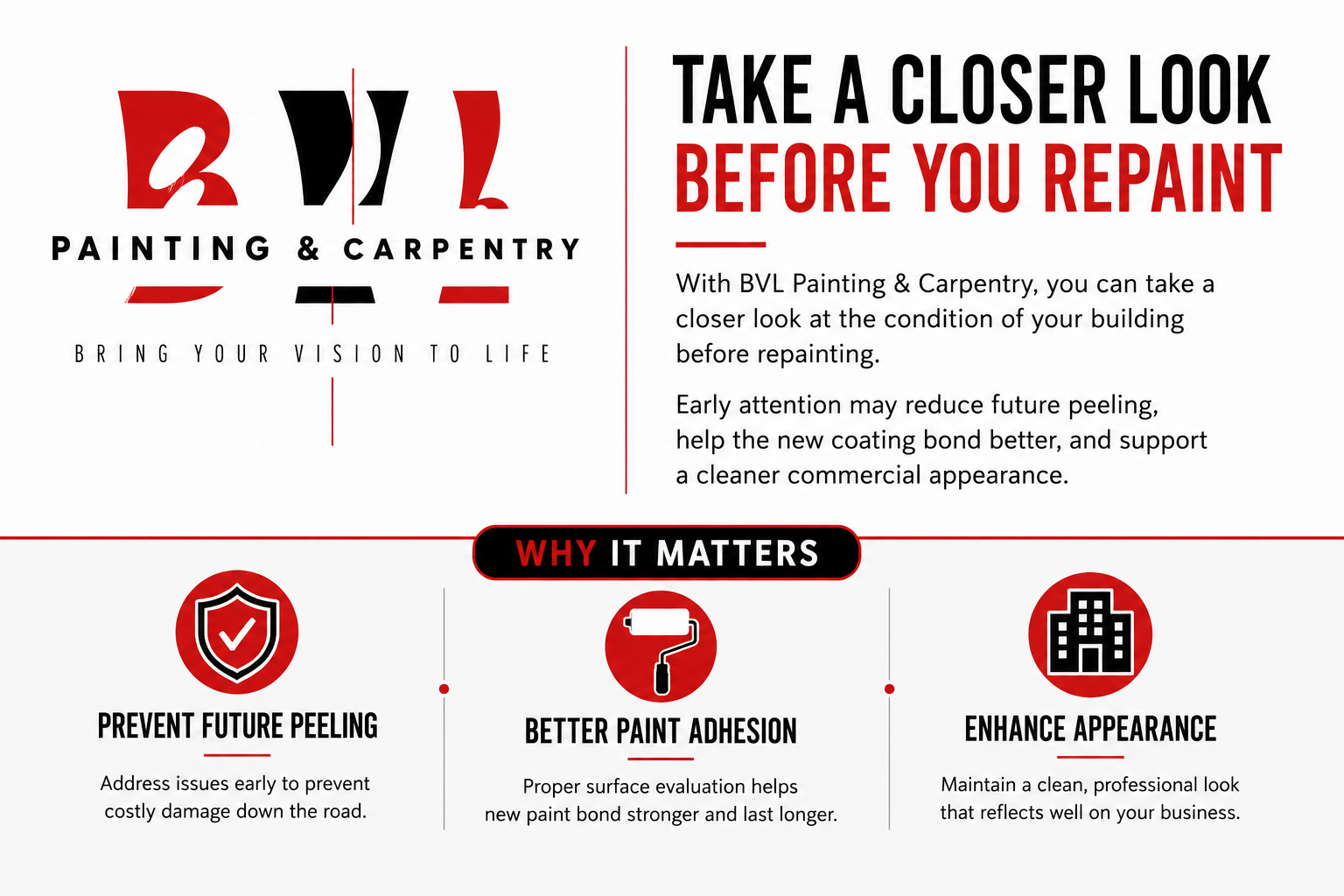
Commercial Surface Prep Before Repainting
Proper prep is one of the most important steps when repainting over chalky exterior paint. New paint needs a clean, sound surface. If loose residue remains, the next coating may fail too soon.
- Wash the exterior to remove loose chalk, dirt, and mildew.
- Let the surface dry fully before repairs or coating work.
- Scrape peeling paint and sand rough edges.
- Repair damaged wood, siding, or trim as needed.
- Use the right primer for the building material.
Our team at BVL Painting & Carpentry follows a practical prep process before applying exterior coatings. You can also explore our exterior painting services to understand how professional work supports a longer-lasting finish.
Smart Ways to Reduce Future Chalking
Preventing chalking starts with better product choices, correct application, and steady exterior maintenance. A strong coating system can better handle sun, rain, and seasonal temperature changes.
- Choose exterior paint made for UV and weather exposure.
- Use primer when the surface needs better bonding.
- Clean exterior walls before heavy buildup develops.
- Keep gutters clear so water moves away from walls.
- Inspect sunny elevations more often during warm months.
A simple maintenance routine can help you notice early coating changes. It can also make future repainting easier because the surface may need less repair before new paint is applied.
Frequently Asked Questions
Is chalking the same as dirty exterior paint?
No. Dirt sits on the surface, while chalking comes from coating breakdown. If powder transfers to your hand after touching the wall, the issue is likely related to paint failure. A helpful first step is reviewing proper prep through our exterior painting prep checklist.
Can exterior paint chalking be washed off?
Loose residue can often be washed off, but washing alone may not solve the problem. If the paint film is weak, the surface may continue to form powder. The right fix depends on how much coating damage is present.
Does rain make chalking worse?
Rain can wash loose pigment down the wall and carry moisture into small cracks. Over time, that may increase peeling or surface wear. Our article on spring rain and exterior paint explains how moisture affects exterior coatings.
When should a commercial building be repainted?
A repaint may be needed when chalking, fading, peeling, or cracking affects a large area. When you choose BVL Painting & Carpentry, we can review the surface condition and help plan the right preparation before new paint is applied.
What service helps with powdery house paint?
Professional exterior painting can help when the surface needs washing, repairs, primer, and a fresh coating system. You can learn more about this process on our exterior painting services page.
Plan a Cleaner, Longer Lasting Exterior Finish
Exterior paint chalking is a sign that your building may need closer care. Addressing it early can support better curb appeal, stronger surface protection, and a more professional look for customers, tenants, and visitors.
At BVL Painting & Carpentry, we can help you plan the next step with clear surface preparation and exterior coating work. To discuss your commercial exterior, reach us through our contact page and start with a focused painting conversation.